
Table setting is one of those subjects that manages to be both trivially simple and quietly intimidating. The rules take three minutes to learn, exist for practical reasons, and once known can be broken deliberately, which is the difference between casual and careless.
The logic
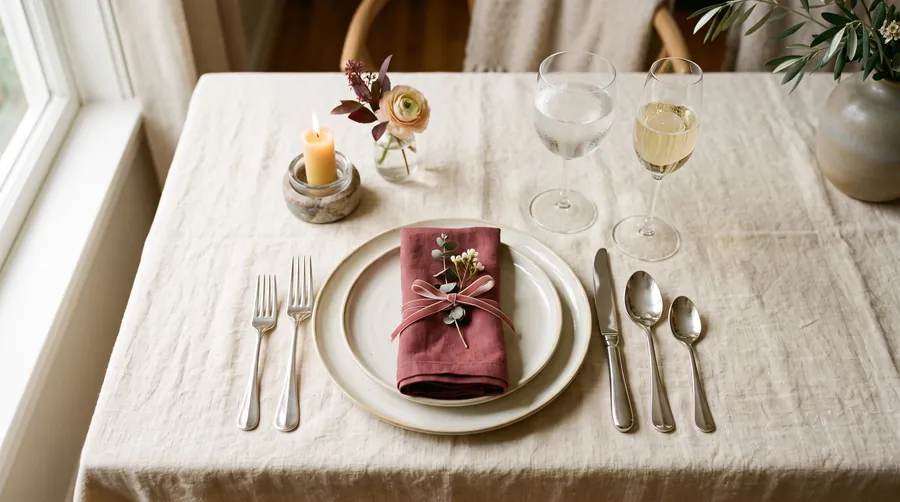
Cutlery is placed in the order it will be used, from the outside in. Forks on the left, knives and spoons on the right, blades facing the plate. Pudding cutlery goes above the plate, horizontally, handles pointing to whichever hand will use them. That is genuinely the whole system, and it exists so that a guest never has to wonder which implement to pick up.
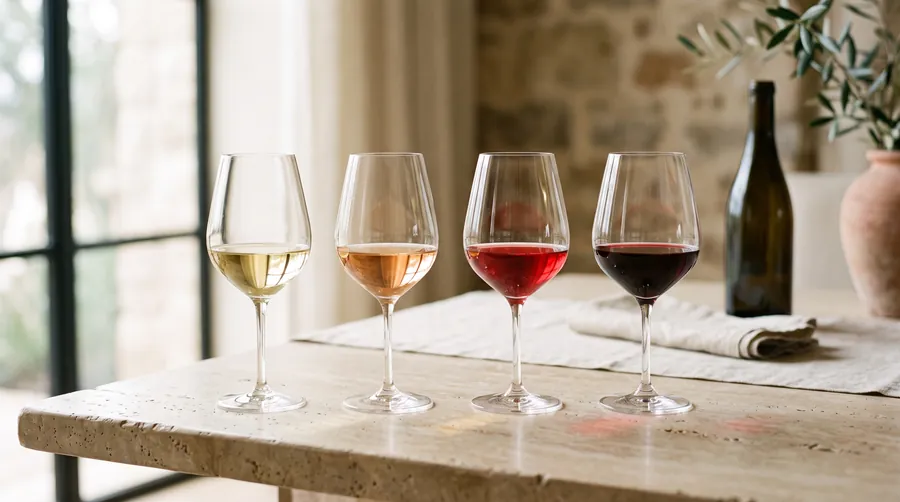
Glasses go above the knife, to the right, in order of use from the outside in. Water glass closest to the diner, wine glasses beyond it. A bread plate, if you use one, sits to the upper left with a small knife across it.
A well set table is not about correctness. It is a signal, made before anyone sits down, that the evening was thought about.
What nobody notices
Whether your plates match. Whether the cutlery is a set. Whether the napkins are linen or good paper. Whether you own a tablecloth. Whether the wine glasses are the correct shape for the grape. A mixed table of inherited and charity-shop china looks considerably more interesting than a matching set from a department store, and every host who has worried about this in advance has worried unnecessarily.
What people do notice
- Whether they have room. Sixty centimetres of table width per person is comfortable, fifty is the minimum. Crowding is the single thing that makes a dinner uncomfortable, and it is solved by putting fewer things on the table.
- Whether they can see across it. Nothing between about 25 and 120 centimetres high in the middle. Flowers low and wide, candles either below eye level or on tall thin sticks above it.
- Whether there is water. A jug on the table from the start, refilled without being asked.
- Whether the light is right. Overhead light off, candles lit, one lamp on in the corner of the room. This does more for an evening than anything on the plate.
- Whether they know where to sit. Even at six, saying who goes where removes an awkward thirty seconds. Place cards are not pretentious at a dinner party; they are kind.
Napkins, flowers and candles
Napkins: cloth if you have them, folded simply and laid on the plate or to the left. Elaborate folding belongs to hotels. Flowers: one type, one colour, cut short in a low bowl or in several small vessels down the table. A supermarket bunch of one variety, stripped of its filler and cut to fifteen centimetres, looks far better than a mixed bouquet in a tall vase. Candles: unscented at the table, always, since scent competes with the food. Light them ten minutes before people arrive so the wicks have settled.
The part that makes it warm
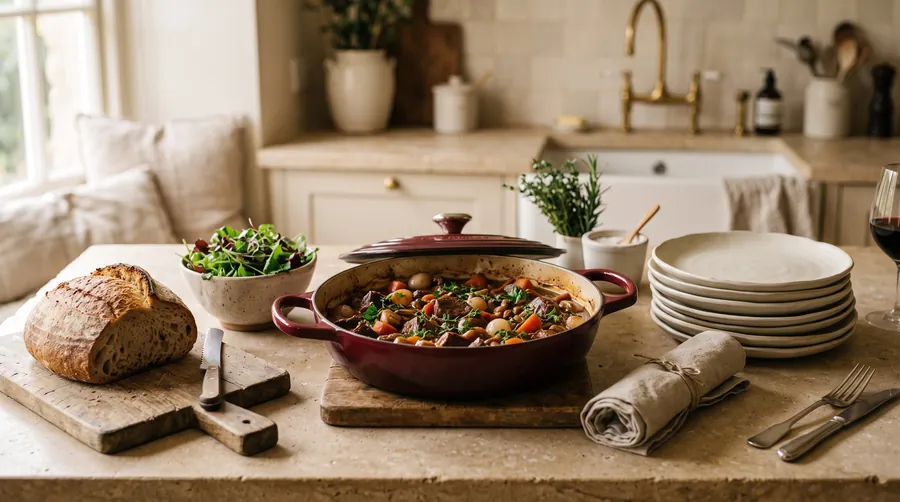
Put something on the table before anyone sits down: bread, olives, a bowl of radishes with butter and salt. A table with food already on it says the evening has started, whereas six empty settings say the evening is waiting for something. It is a small thing and it changes the first ten minutes entirely.
Our Table tool draws the setting for the menu you choose, with the right number of glasses and the correct cutlery for each course, and it is a faster answer than any diagram.
Try the tool
The TableMenu, timings and the settingQuestions we get asked
Which side does the napkin go?
On the plate or to the left of the forks. On the plate reads slightly more formal and is easier when the first course is served from the kitchen.
Do I need different glasses for red and white?
One good all-purpose glass, reasonably large and tapered at the rim, serves both perfectly well. Multiple shapes are a pleasure rather than a requirement.
What about phones on the table?
Ask for them face down or away, and set the tone by putting yours in another room before anyone arrives. Nobody objects when the host has already done it.