
The dinner party has acquired a reputation for difficulty that it does not deserve, largely because the model people have in their heads involves three courses cooked simultaneously while making conversation. That model is genuinely hard. It is also nothing like how a restaurant works, and restaurants are the people who have solved this problem.
A professional kitchen does almost everything in advance and assembles at service. A domestic host can do the same, and the whole difficulty disappears.
The principle
One dish in the oven that needs no attention. One dish already cold and finished. One thing assembled in front of people, because it looks generous and gives you something to do with your hands. Nothing that requires you to be at the hob while guests are in the room.
Nobody remembers what they ate at a dinner they enjoyed. They remember whether the host sat down.
A menu that works for six
To start, on the table when they arrive: good bread, a bowl of olives, and one thing you made: whipped ricotta with lemon and olive oil, or a bowl of beans dressed while warm the day before. No plating, no timing, no standing up.
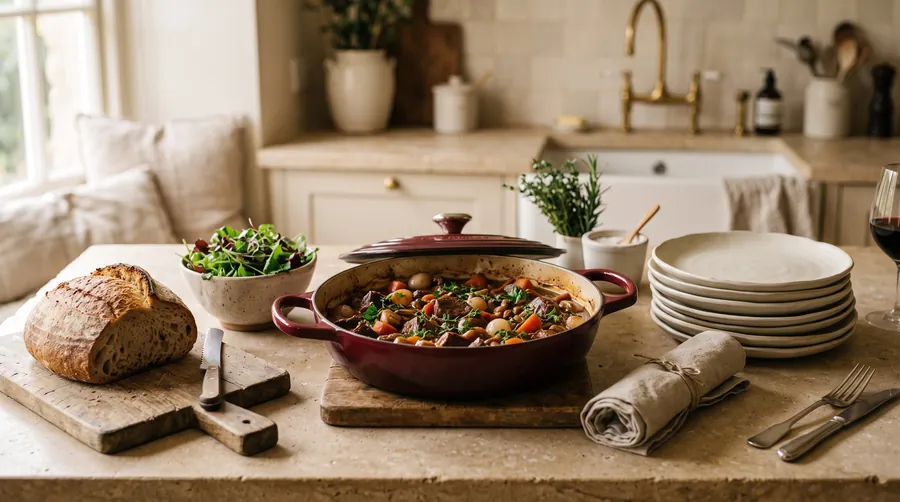
Main: a braise. Shoulder of lamb with white beans, beef cheeks in red wine, a chicken and preserved lemon tagine, or a chickpea and squash stew with harissa for a meat-free table. All of them are better on day two, all of them forgive an hour of delay, and all of them are finished before anyone arrives.
With it: something green cooked in ten minutes at the last moment, and a grain or potato that can sit warm. Not three sides. Two.
Pudding: made the day before, ideally something that lives in the fridge. A chocolate pot, a set custard, a poached fruit with cream, a tart bought from a good bakery and served without apology.
The timetable, written down
This is the actual technique. Not the recipes, the timetable, written on paper and stuck to a cupboard.
- Two days before: shop. Check you own six of everything: plates, forks, glasses, chairs.
- The day before, afternoon: make the braise and the pudding. Both go in the fridge. Wash and dry the salad leaves. Lay the table.
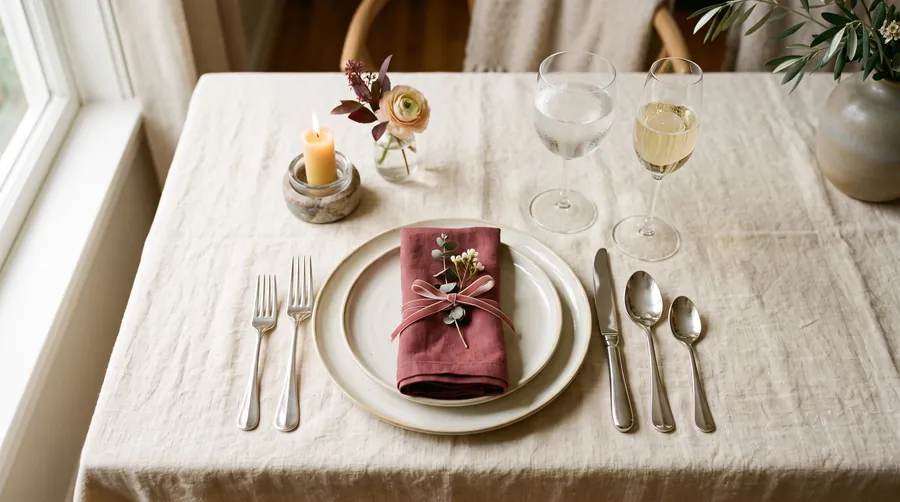
- On the day, morning: take the braise out to come to room temperature two hours before it goes in. Chill the white wine. Buy the bread.
- Ninety minutes before: braise into a low oven. Set out glasses and the starter things. Shower and change. This is the point at which the kitchen is finished.
- Fifteen minutes before: pour yourself a drink. Sit down for five minutes. This is not a joke; it is the difference between a host and a caterer.
- At the table: the green vegetable takes ten minutes while people are already eating bread and talking. Everything else is carried in.
Quantities for six
Bread: two loaves. Braise: 200 to 250 grams of trimmed meat per person, or 1.5 kilograms bone-in. Grain: 60 grams dry per person. Green vegetable: 150 grams per person. Wine: four bottles, one white and three red, or the reverse in summer. Water on the table from the beginning, in a jug, because nobody wants to ask.
Different diets, without a separate menu
Ask when you invite, not on the night. Then build the meal so the sides are the meal for anyone who does not eat the main: a proper grain dish, a substantial vegetable, good bread and cheese constitute dinner. Cooking a separate small plate for one guest makes them conspicuous, which is the opposite of hospitality.
Our Table tool takes your number of guests and the season, and returns a make-ahead menu with a countdown timetable, quantities and a wine suggestion, which you can print or send to your phone.
Try the tool
The TableMenu, timings and the settingQuestions we get asked
How many people is the right number?
Six is the largest number that can hold a single conversation, and the smallest that feels like a party. Eight works if the table is round.
What if I have a very small kitchen?
It matters far less than people think, because a make-ahead menu uses the kitchen at different times. What you need is fridge space, which is worth clearing the day before.
Should I cook something I have never made before?
No. Cook something you have made twice. The pleasure of the evening does not depend on novelty, and the anxiety of an untested recipe is felt by everyone in the room.