
There is a particular kind of regret reserved for coats. The dress you bought in error hangs in the wardrobe and says nothing. The wrong coat follows you through an entire winter, every morning, in the hallway mirror, for four months a year until you replace it. Which is why the coat deserves more thought than almost anything else you will buy, and gets less.
The good news is that coats are a solved problem. The shapes that work have worked for eighty years, the cloths that last are known quantities, and the fit points that decide whether a coat looks expensive can be checked in a changing room in ninety seconds.
Start with the cloth, not the label
Turn the coat inside out and find the composition label. What you want to read is wool, and preferably a high percentage of it. A coat at 80 per cent wool with 20 per cent polyamide is a perfectly sensible garment; the synthetic adds tear strength at the seams. A coat at 45 per cent polyester with wool listed politely first is a coat that will pill at the cuffs by February and shine at the seat by March.
Weight matters as much as fibre. Coating wool is measured in grams per square metre, and the useful band for northern Europe sits between 500 and 750. Below 450 the coat will not hang; it will flutter, and it will not keep you warm without a jumper doing all the work. Above 800 you are in the territory of proper melton and loden, which are magnificent, heavy, and occasionally too warm for a mild December.
Cashmere, at this point, needs a word of caution. A 100 per cent cashmere coat is glorious for the first season and thin by the third, because the fibre is short, soft and not built for the friction of a shoulder bag. A blend of 70 per cent wool with 30 per cent cashmere gives you most of the hand and considerably more of the life.
A coat is the garment other people see most and you think about least. It is worth reversing that ratio for one afternoon.
The four fit points
- The shoulder. The seam should sit at the end of your shoulder or a centimetre beyond it, never inside. A dropped shoulder is a design decision and reads as one; a shoulder that has slipped because the coat is too big reads as borrowed. This cannot be altered affordably. If the shoulder is wrong, the coat is wrong.
- The chest, over a jumper. Try every coat over the thickest thing you will wear beneath it. If you can cross your arms in front of you without the back seams straining, it fits.
- The length. Below the knee reads as considered, at the knee reads as neutral, above the knee shortens the leg and dates faster. If you are under about 165 centimetres, mid-calf can be beautiful but the coat must be narrow enough not to wear you.
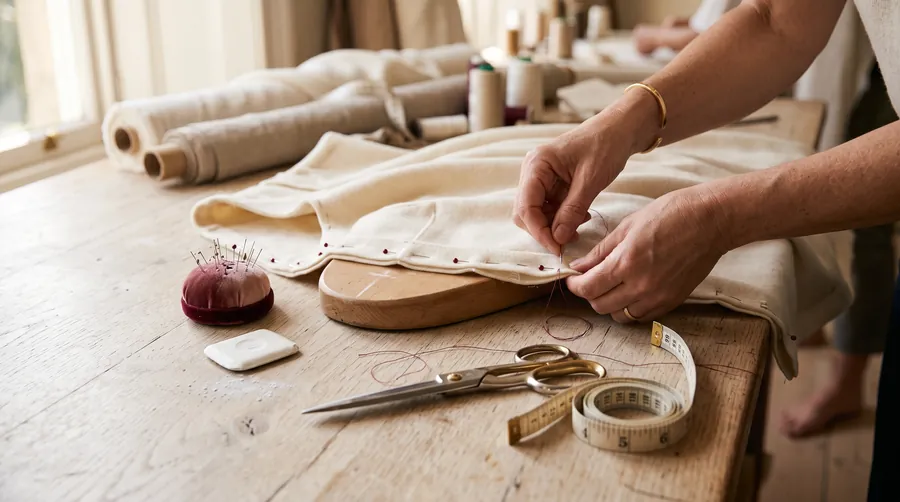
- The sleeve. It should end at the wrist bone, covering the shirt cuff entirely. Sleeves are the cheapest alteration there is, usually 25 to 45 euro, and almost every off-the-peg coat needs them shortened by a centimetre or two.
Which shape, honestly
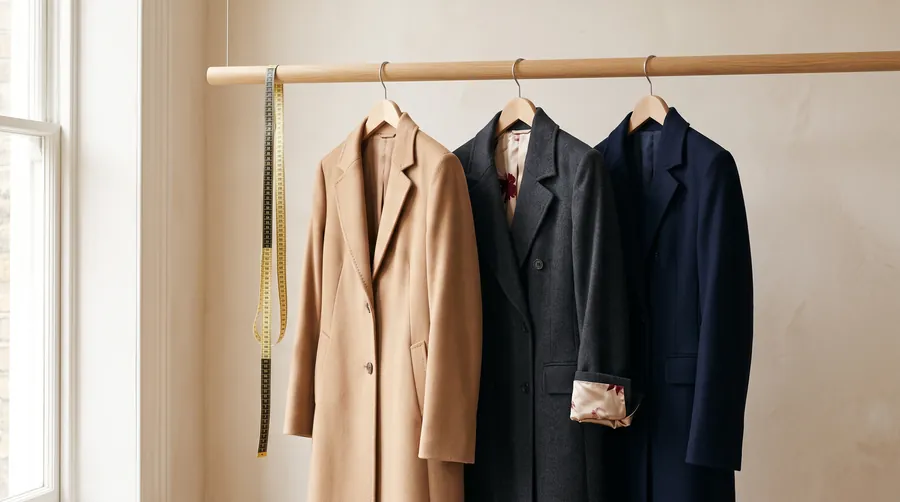
Three shapes have never stopped working. The straight single-breasted coat with a notch lapel is the most versatile garment in outerwear and suits nearly everyone. The double-breasted polo or wrap coat is warmer, more formal in feel and needs a defined waist or a belt to avoid reading as bulk. The raglan-sleeved balmacaan, with its soft diagonal shoulder seam, is the most forgiving of all shapes and the best choice if off-the-peg shoulders never sit right on you.
Everything else, and there is a great deal of everything else each autumn, is a variation with a shorter life expectancy. Buy those second, in a colour you enjoy, at a price that will not sting when the shape passes.
What to pay
Between 150 and 300 euro you can find a decent wool-blend coat from a large retailer, and if the shoulders happen to fit you, it will give you three or four winters. Between 400 and 900 is where the honest money sits: proper cloth, a lining that will not shred, buttons sewn on with a shank, and finishing that survives a decade. Above 1,200 you are buying an Italian mill name, hand-finished details and the pleasure of ownership, all of which are real, none of which extend the life much further.
The arithmetic that matters is cost per wearing. A 700 euro coat worn 120 days a winter for eight winters costs 73 cents a day. A 200 euro coat replaced every three years costs more, looks worse, and puts three coats into landfill.
Colour, if you only buy one
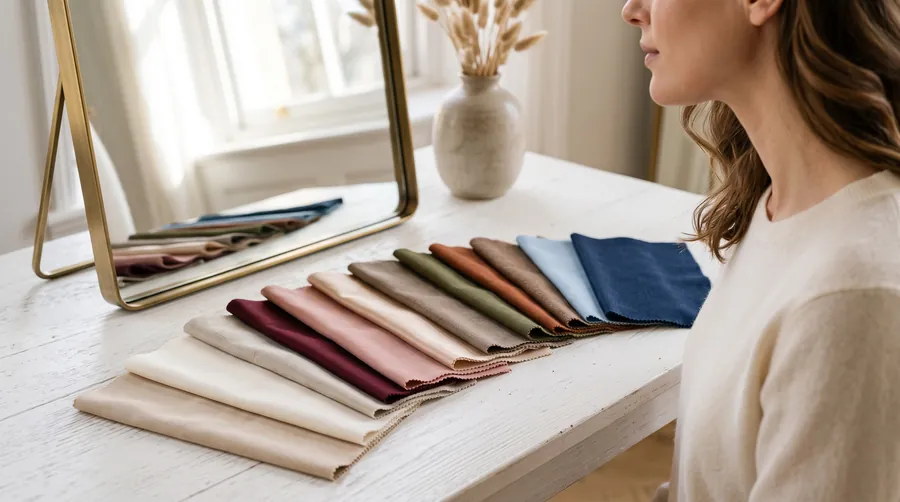
Camel, charcoal, navy and black are the four that go with everything, in roughly that order of usefulness. Camel is the quiet luxury choice and the least forgiving of stains. Charcoal is the most flattering neutral for most colouring. Navy is under-used and excellent. Black is the easiest and the flattest; it can look severe against very fair or very warm skin, which is exactly the sort of thing our Colour Season tool settles in three questions.
How to make it last ten years
Hang it on a broad wooden hanger, never a wire one, and give it a day between wearings when you can. Brush it downwards with a clothes brush after wet days; wool sheds dirt if you let it. Dry clean at most once a season, because solvent is hard on the fibres and the lining. Have the lining repaired the first time it splits rather than the fourth. Keep the spare button. Sew the loose one back the evening it loosens, not in April.
Do these things and the coat becomes the thing people recognise you by, which is the highest compliment a garment can be paid.
Try the tool
Capsule WardrobeThirty-eight pieces, counted honestlyColour SeasonThe twelve shades that lift your faceQuestions we get asked
Is a belted coat worth it if I am not slim?
Yes, and often more so. A belt at the natural waist creates a shape that a straight coat leaves undefined. What matters is that the belt is tied rather than buckled tight, and that the coat is cut with enough cloth to drape below it.
Should I size up for a winter coat?
Only if the chest strains over a jumper. Sizing up to gain warmth costs you the shoulder, which is the one thing that cannot be fixed. Buy for the shoulder and let a tailor take in the waist.
Wool or down for real cold?
Below about minus ten, down wins on warmth and nothing else. Many people are best served by both: a wool coat for the city and a good down parka for the ten worst days of the year.