
Ready-to-wear clothing is cut for a statistical composite: a woman of a particular height, with a particular ratio between waist and hip and a particular arm length. She does not exist. The garment industry knows this perfectly well, which is why the good department stores have an alterations counter on the same floor as the tills, and the cheap ones do not.
What follows is the list of what can be done, roughly what it costs in a European city in 2026, and how to describe what you want without knowing the vocabulary.
The six that are always worth it
- Hemming trousers and skirts. 15 to 30 euro. The single highest-return alteration there is. Bring the shoes you will wear with them; a two centimetre difference in heel changes everything about how a trouser hangs.
- Taking in the waist. 20 to 40 euro. Solves the gap at the back of trousers and skirts that fit at the hip. If the gap is more than about five centimetres, ask for the back seam and the darts to be adjusted together so the pockets do not distort.
- Shortening sleeves. 25 to 45 euro on a shirt or blouse, 45 to 80 on a lined jacket with buttons at the cuff. A sleeve that ends at the wrist bone instead of the knuckle is the difference between a jacket that fits and one that was bought.
- Taking in a side seam on a dress or blouse. 25 to 50 euro. Reliable through the waist and the ribcage, less so across the bust, where a good tailor will move the darts instead.
- Adding or moving a lining, replacing a zip. 30 to 70 euro. Almost always cheaper than replacing the garment and the reason good coats reach their second decade.
- Shoulder pads out, or down a size. 20 to 45 euro. An unfashionably strong shoulder can be softened in an afternoon, which rescues a great deal of excellent second-hand tailoring.
Off the peg means cut for an average nobody actually is. The tailor is not a repair; the tailor is the second half of the purchase.
The four that are not worth it
- Shoulder width on a jacket. Technically possible, costs more than most jackets are worth, and rarely comes back looking right because the sleeve head has to be rebuilt.
- Rise on trousers. The distance from crotch to waistband defines the whole garment. Changing it means recutting, which means buying different trousers.
- Letting anything out beyond the seam allowance. Most ready-to-wear has one to two centimetres to give, and the old stitch line often shows. Ask before you buy the smaller size in hope.
- Anything on a garment costing less than about 60 euro. The alteration will cost half the item and the fabric may not survive the machine.
How to brief a tailor without the vocabulary
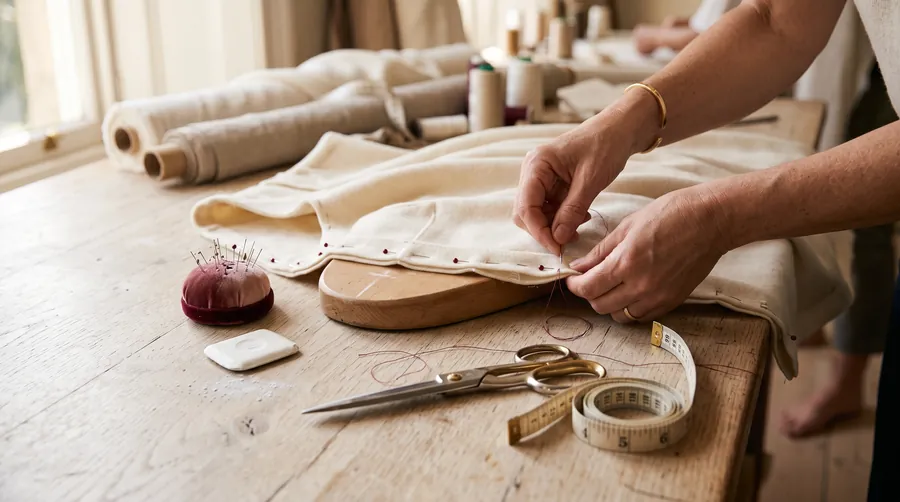
You do not need the words. Put the garment on, stand still, and describe the problem in ordinary language while pointing at it: this gapes when I sit, this pulls when I reach forward, this is long enough to catch under my heel. A competent alterations tailor will pin it in front of a mirror while you watch, and will tell you what they cannot do. If they pin without asking you to sit down, find another one.
Three practical rules. Always try the garment on with the correct undergarments and shoes. Always sit down in a fitting; a skirt that fits standing and rides up sitting has not been fitted. And always ask for the pins to stay in while you look at yourself from the back, using two mirrors, because the back is where every fitting problem shows first.
What this costs over a year
A working wardrobe usually needs about 150 to 250 euro of alterations a year, spread across five or six garments. That is less than a single mediocre purchase and it improves everything you already own, which is the arithmetic that most shopping never manages.
Try the tool
Fit GuideSizes that mean the same thingCapsule WardrobeThirty-eight pieces, counted honestlyQuestions we get asked
How do I find a good alterations tailor?
Ask a dry cleaner who they use, or ask at a shop that sells expensive tailoring where they send their customers. Then test with a hem before you hand over a coat.
Can second-hand clothes be altered successfully?
Frequently, and it is the best value in clothing. Older ready-to-wear was cut with more seam allowance, so it can be let out as well as taken in.
Is it worth altering a garment that was cheap?
Only if you love it and will wear it weekly. As a rule, do not spend more than a quarter of the purchase price on alterations for anything under 100 euro.