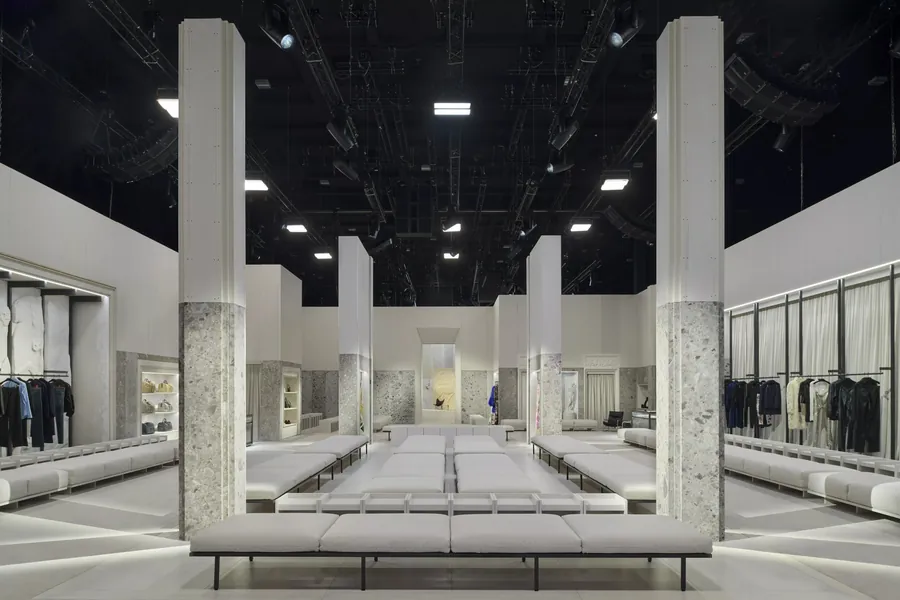
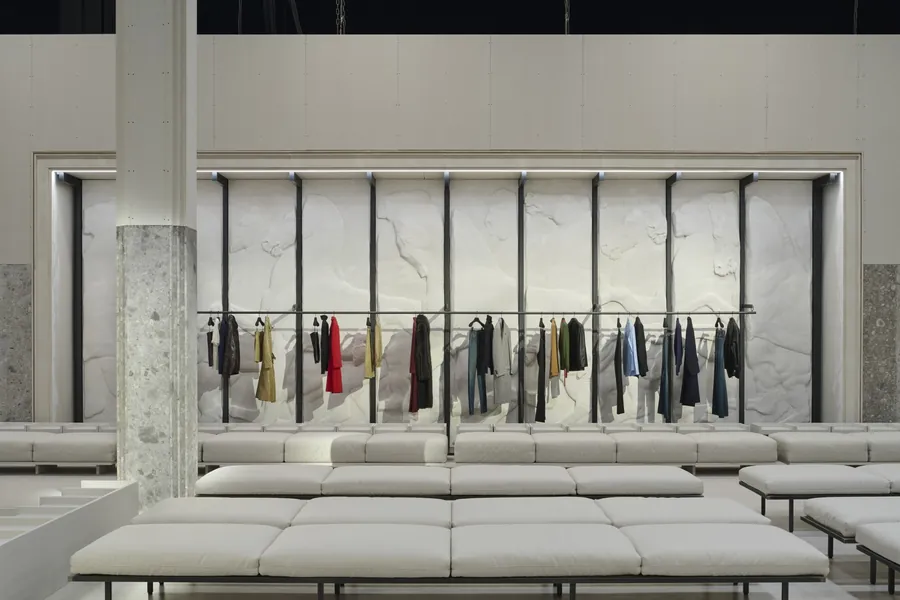
Gucci calls The Store Show the first collection to express Demna’s personal vision for the house, shaped by everything he has learnt since his arrival. Rather than a conventional runway, it was staged in a space conceived as a shop, and that choice is the thesis: according to Gucci, the set previews the aesthetic Demna has in mind for the Gucci stores of the future.
The idea runs deeper than the scenery. Menswear and womenswear followed one another as two collections within one show, mirroring the way the two lines are offered in store. Pale benches, stone-clad columns and long rails of clothing made the audience feel less like spectators and more like the first customers of a boutique that does not exist yet.
Three characters, one wardrobe
Demna’s Gucci, as the house describes it, is carried by a complete palette of personalities: The Rebellious Aristocrat, The Snob and The Eccentric. The collection reads best as a conversation between the three.
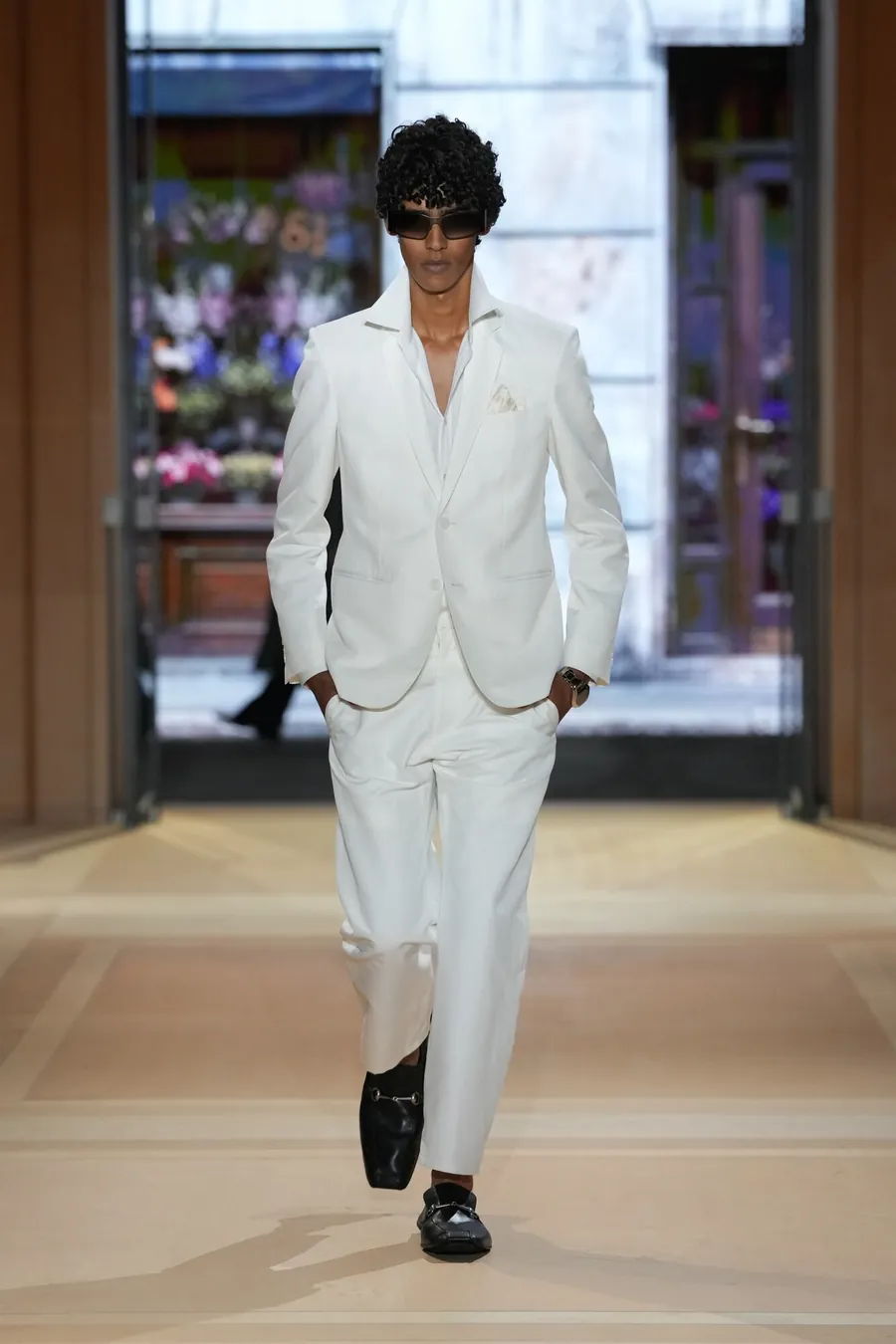
The men’s half opens on a quintessentially Italian note, with cropped trousers and loafers worn without socks. A study of posh dress codes leads into sharp, fitted tailoring with pagoda shoulders, cut in stonewashed textiles. Then comes the silhouette Demna proposes as Gucci fashion for men: cropped, puff-shaped outerwear sitting on top of slender, slouchy denim in precious, authentic fabrics.
The women’s half starts with bourgeois dress codes and a hint of the stable yard, then moves into sharply tailored trouser suits and skirt suits with a metropolitan undertone. Severe pagoda-shouldered pieces are built without pads, for lightness, before the women’s version of that fashion silhouette arrives: puff-shaped jackets worn over masculine shirting, rugby tops and sharply pleated A-line skirts in genuine Scottish tartans, leather and checked wool.
Horsebits, large and small
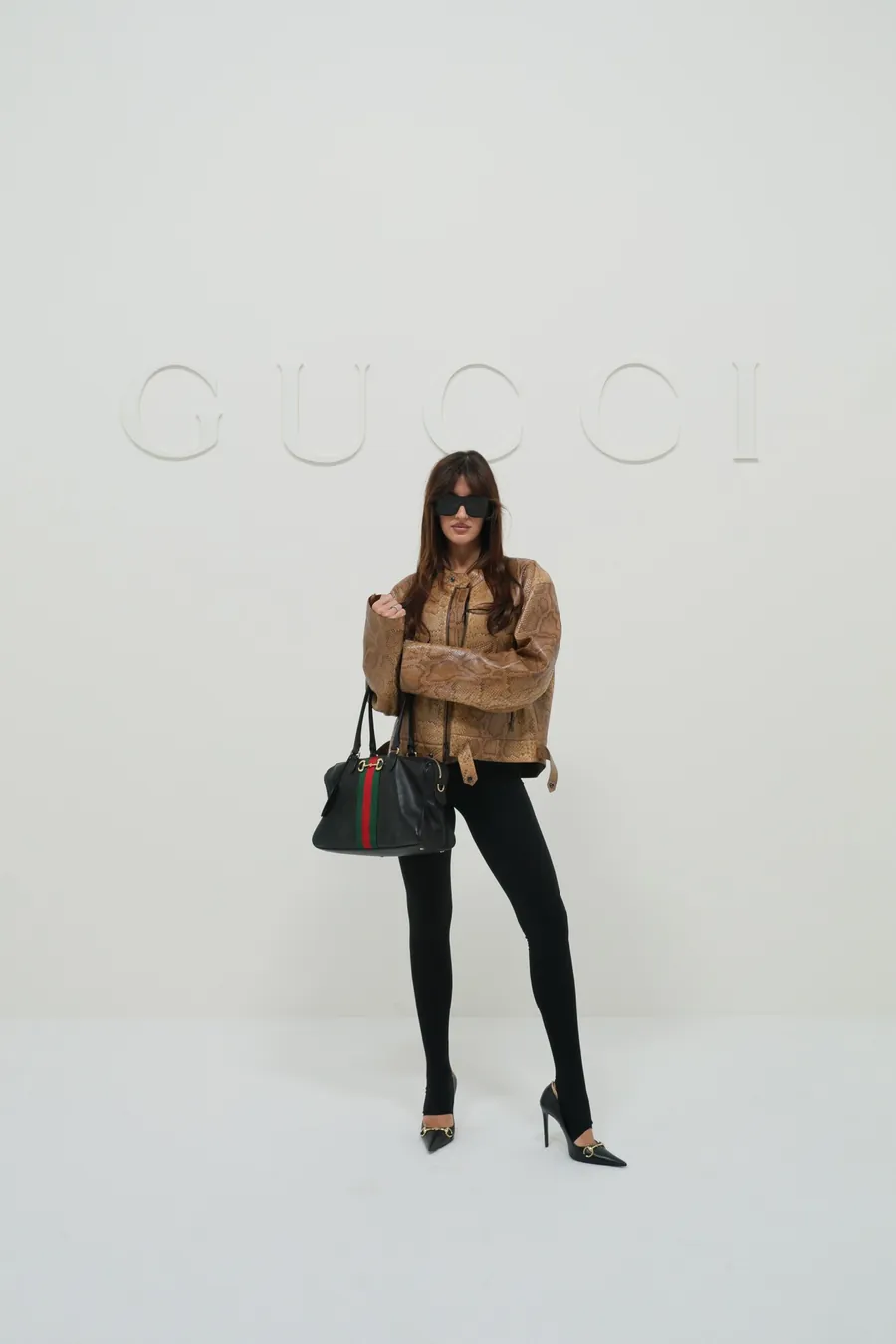
Gucci’s equestrian identity runs through everything. Horsebits appear oversized and in miniature, most memorably on the 3X cummerbund belt, which cinches the ‘New Romantic’ looks: sharp-shouldered blouses, drainpipe trousers and layered jewellery. Delicate lingerie lends a nocturnal glamour to voluminous shearling, and the precisely cut, fluid eveningwear ends in a slinky ‘gravity’ gown held in place by a hanging teardrop weight.
The bags and shoes to know
- The ‘uptown’ Horsebit tote: sleek and polished outside, with an organised multi-compartment interior.
- ‘Bamboo’ handles: flexible handles made of leather sections, on handbags and slouchy messengers.
- The 3X: a belt adorned with three Horsebits, translated into a slim party bag.
- A bamboo-shaped mini duffle: a shoulder bag imagined as a daily companion.
- The classics: the GG Marmont and the Ophidia return as part of the house’s bourgeois heritage.
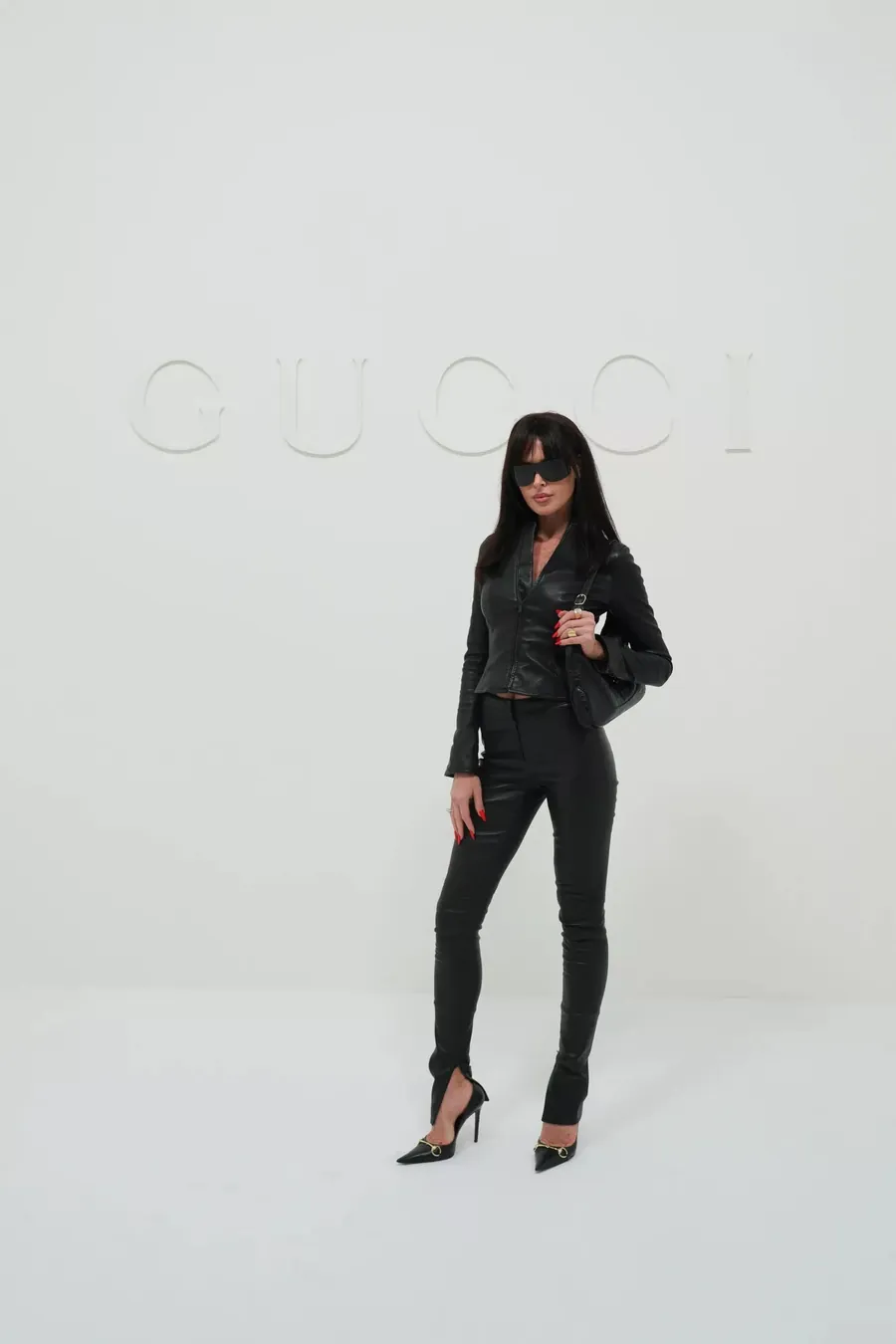
On the feet, Demna presents his first take on a modernised Gucci loafer: a sleek shoe with a driver sole and an angular toe. Beside it stand a slim slipper trailing overlong fabric tassels, conceived as a boudoir shoe that is ready for the street, an angular stiletto with a metal heel, and an equestrian knee-high boot on a heel, embellished with monogrammed stirrups.
Back to The Savoy
The collection also returns the house to its roots at The Savoy hotel, which Gucci remembers as a meeting place for people from entirely different worlds. The thought is carried into the present: Gucci as a space of possibility, where people who seem to have nothing in common meet, connect and inspire one another, and where anyone can become whoever they choose to be.
A soundtrack of its own
This time the music was composed rather than curated. The Store is the first original soundtrack that loki, Gucci’s Music Director, has written for the house. The first half accompanies the menswear with a playful take on bossa nova, with jazz, piano and Brazilian percussion. The second half follows the womenswear into a deep, sensual tango that builds slowly towards a finale of orchestral percussion. Or, as Gucci puts it: “The sound of Gucci is not a genre; it’s a point of view.”