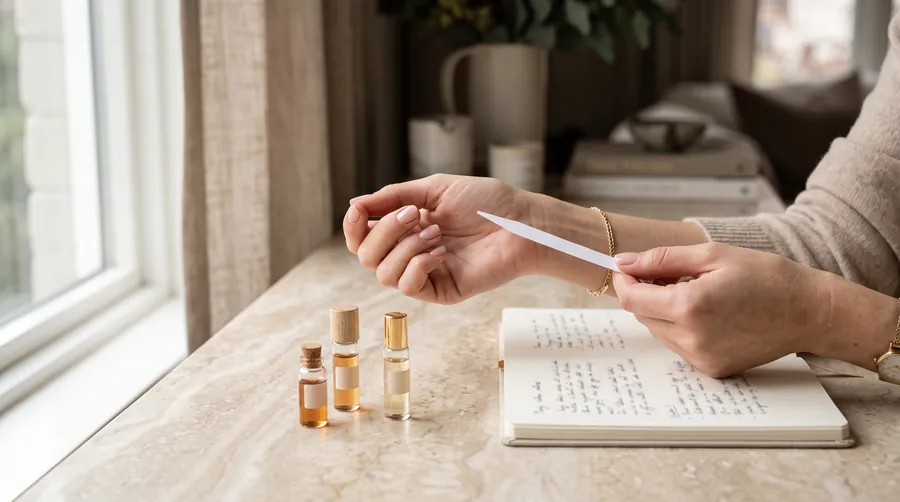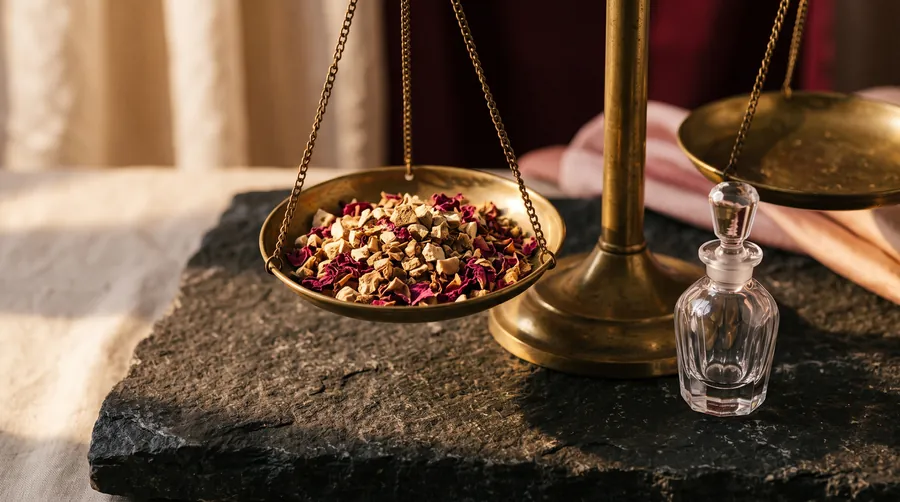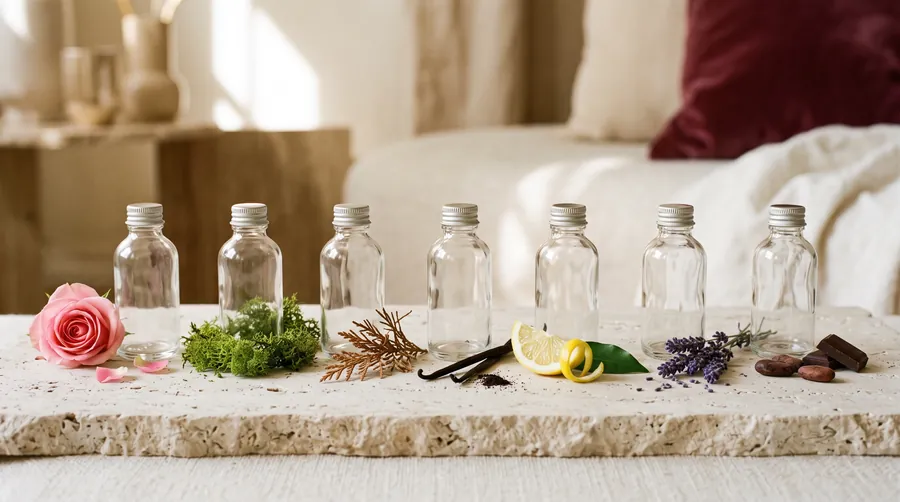

A perfume counter is arranged by brand, which is the least useful possible arrangement for a person trying to find something they like. Perfumers do not think in brands; they think in families, and the family predicts how a scent will behave on you far more reliably than the house that made it.
There are seven that cover almost everything on a shelf. Learn them and a counter becomes navigable in ten minutes.
Floral
The largest family and the most varied, held together by a flower at the centre. A soliflore builds around one blossom, usually rose, jasmine, tuberose or lily of the valley. A floral bouquet blends several. The character depends enormously on which flower: rose can be jammy or metallic, jasmine is warm and slightly animalic, tuberose is creamy and enormous, and iris is powdery, cool and expensive to make, which is why it appears in serious perfumery and rarely in cheap.
Chypre
Named after a 1917 Coty composition inspired by Cyprus, and the most sophisticated structure in perfumery: citrus at the top, floral in the middle, oakmoss and labdanum at the base. Chypres smell dry, green and slightly bitter, which is why people either love them immediately or need three encounters. Regulation of oakmoss has forced modern reformulation, so a 1970s chypre and its current bottle can be noticeably different compositions.
Nobody dislikes perfume. People dislike two or three families and have never been told that the other five exist.
Woody
Sandalwood, cedar, vetiver, patchouli and the synthetic ambers that have dominated the last two decades. Woody scents sit close to the skin, last well, read as unisex more often than not and are the safest family for an office. If you have ever been told a perfume smells like an expensive room, it was probably woody.
Amber, once called oriental
Vanilla, resins, spices, benzoin and labdanum, often with a floral heart. Warm, sweet, dense, and best in cold weather because heat amplifies them beyond comfort. The family that produces the most compliments and the most complaints, sometimes on the same evening.
Fresh
Citrus, aquatic and green all live here. Citrus is bright and short-lived by nature; the molecules are small and evaporate fast, which is why a cologne needs reapplying at lunch and should not be judged for lasting badly. Green scents, built on galbanum, violet leaf and cut grass, are underrated and marvellous in spring.
Fougère
Lavender, coumarin and oakmoss, invented in 1882 and the backbone of most masculine marketing ever since. Which is a historical accident rather than a rule; a fougère on a woman reads as crisp, herbal and slightly aloof, and several of the best modern ones are marketed to nobody in particular.
Gourmand
The youngest family, dating from Angel in 1992: vanilla, caramel, praline, coffee, chocolate. Divisive by design. A gourmand does not whisper, and the good ones balance the sweetness with something salty, smoky or bitter so that the effect is a dessert rather than a syrup.
How to use the map
Take the three perfumes you have most enjoyed in your life, look up which families they belong to, and you will usually find two families doing all the work. Then explore the neighbouring family rather than the whole shop: chypre lovers usually enjoy green florals, woody lovers frequently enjoy dry ambers, and gourmand lovers often like the salty end of amber.
The Fragrance Compass maps your preferences on five axes and returns three bottles across two families, with the notes that explain the recommendation. It is considerably faster than a Saturday on Oxford Street and does not exhaust your nose.
Try the tool
Fragrance CompassMap your scent in five slidersQuestions we get asked
Are the families official?
They are conventions rather than a legal standard, and different classification systems draw the lines slightly differently. The seven above are the ones perfumers and retailers use most consistently.
Which family lasts longest?
Amber and woody, because their molecules are heavy and evaporate slowly. Citrus is shortest by chemistry, not by quality.
Are masculine and feminine categories meaningful?
Commercially yes, chemically no. The same molecules are used on both sides of the counter and the labelling reflects marketing traditions from the 1880s.