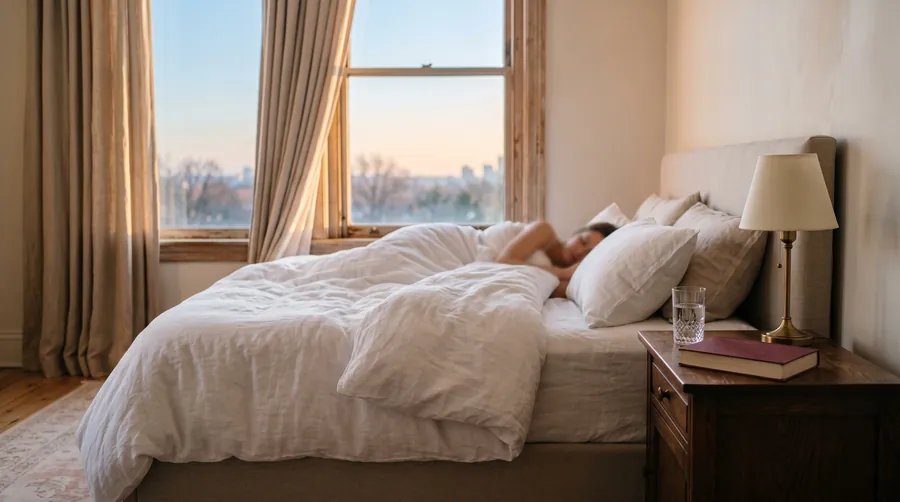

The sleep industry has grown enormous by selling objects: weighted blankets, magnesium sprays, silk masks, trackers, teas and gadgets. Some are pleasant. Almost none of them address the two variables that actually govern sleep, which are the consistency of your wake time and the amount of light you see in the morning.
The mechanism, briefly
Sleep is driven by two systems working together. The first is sleep pressure, a chemical build-up across your waking hours that makes you progressively sleepier; it resets when you sleep and is blunted by naps and by caffeine. The second is the circadian rhythm, an internal clock that runs slightly longer than 24 hours and is reset every day, principally by light hitting the eye in the morning.
Nearly every practical intervention that works acts on one of those two. Nearly every product that does not work acts on neither.
Almost everything sold for sleep addresses the evening. Almost everything that works addresses the morning.
In order of effect
- A fixed wake time, seven days a week. Including weekends, within about half an hour. This anchors the clock, and it is the single most powerful change available. Going to bed at a fixed time does far less, because you cannot force sleep; you can only be reliably awake.
- Morning daylight within an hour of waking. Ten to twenty minutes outside, even under cloud, which delivers vastly more light than any indoor room. In northern winters, a 10,000 lux lamp for twenty minutes at breakfast is a reasonable substitute.
- Caffeine timing. Caffeine has a half-life of five to six hours, so a four o’clock coffee leaves a meaningful dose in your system at midnight. A cut-off eight to ten hours before bed is the useful rule, and it changes sleep depth even in people who insist coffee does not affect them.
- Temperature. Core body temperature must fall for sleep to begin. A bedroom between 16 and 19 degrees, and a warm bath ninety minutes before bed, which paradoxically accelerates the fall by drawing blood to the skin.
- Alcohol. It shortens the time to falling asleep and destroys the second half of the night, suppressing deep sleep and fragmenting REM. Two glasses with dinner is the most common cause of the four o’clock waking.
What to do when you wake at three
Waking in the night is normal; lying there for an hour is what makes it a problem. If you have been awake for around twenty minutes, get up, go to another room, keep the light low and read something undemanding until you feel sleepy. This is the core of cognitive behavioural therapy for insomnia, the treatment with by far the best evidence, better than any medication for chronic sleeplessness. It works by preventing your brain from learning that the bed is a place for lying awake.
On trackers
Consumer sleep trackers estimate stages from movement and heart rate and are unreliable for that purpose. More importantly, they create anxiety about a number, and anxiety about sleep is itself a cause of poor sleep, a phenomenon documented well enough to have a name. If a tracker makes you calmer, keep it. If you check it before you have got out of bed, put it in a drawer for a month.
When it is medical
Snoring with pauses in breathing, waking unrefreshed after eight hours, restless legs, and insomnia persisting beyond three months are all reasons to see a doctor rather than adjust a bedtime routine. Sleep apnoea in women is substantially under-diagnosed, partly because it presents as fatigue and low mood rather than dramatic snoring.
Try the tool
Ritual WeekA week that restores youQuestions we get asked
Is eight hours mandatory?
Seven to nine covers almost everyone, and the individual variation is smaller than popularly believed. Judge by how you feel at eleven in the morning rather than by the number.
Do magnesium and melatonin help?
Melatonin helps with shifting a body clock, as after long-haul flights, and does little for ordinary insomnia. Magnesium helps if you are deficient. Neither is a treatment for a schedule problem.
Are naps bad?
A twenty minute nap before three in the afternoon is harmless and restorative. Longer or later naps reduce the sleep pressure you need for the night.